|
|
Sponsored by: |
| |
|
MEI Conferences: Minerals Engineering '99 |
|
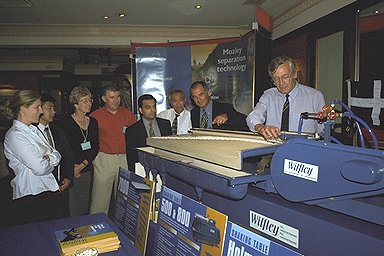
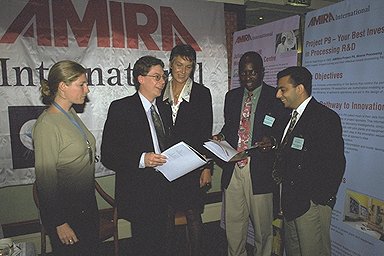
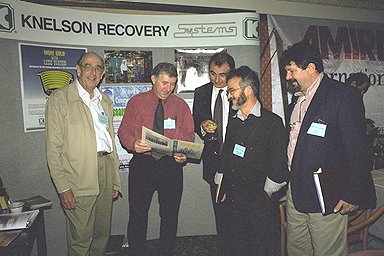
Conference Report The 9th Minerals Engineering conference was held in Falmouth, a beautiful coastline town located in West Cornwall, in the United Kingdom. The relevance of conducting the conference in the rural setting of West Cornwall was its historical mining heritage from which several technologies used in various industries and modern mining practices were derived. Delegates of the conference were provided tours of several of the old mine workings located throughout Cornwall and introduced to the beautiful and historic landscape of the region. Over 90 delegates, representing 22 countries from as far as Australia, North and South America, Europe and Asia, attended the conference. The venue included 56 high quality presentations which were selected from among the over 100 abstracts submitted to Minerals Engineering International. The presentations were comprised of 44 oral deliveries and 12 posters. The posters were located in the social areas of the conference, which provided an excellent atmosphere for technical discussions. The full-papers from the presentations will be peer-reviewed upon submission and those accepted will be published in the Minerals Engineering journal. The 44 oral presentations were delivered in 6 technical sessions that were delivered over the three days of the conference. A co-current session format was not utilized during the conference, which allowed the delegates to participate in each of the presentations. The technical sessions covered the following broad topics associated with mineral processing and extractive metallurgy:
Control, Simulation and Analytical Techniques: In this session, the traditional recovery versus enrichment ratio curve was addressed in terms of defining a relationship that can be used to accurately access separation performance. The enrichment ratio achievable by froth flotation was the subject of two presentations, which presented the results from studies of flotation froths. In one paper, a three-phase dynamic model of the froth phase was introduced with visualization of the model results through computer-derived pictures of the simulated froth. The characterizing of flotation froths was also achieved in another study through a combination of morphological and color-based methods. The current develops of the use of tomography to visualize slurry behavior in hydrocyclones was presented with confirmation of the practical application in an operating plant for process control. The successful development and commercial application of a novel conductivity-based control system for controlling the operation of a thickener was also introduced. Froth Flotation: This session contained the largest number of presentations with a total of 10. The topics included reports on new flotation technologies such as the Smart Cell and the air sparged hydrocyclone. The results of studies on the mechanisms of flotation were presented which included the recovery of minerals by entrainment and hydrophobic interactions. The optimization of the grinding circuit on the basis of flotation performance at an operating copper mine was described along with plant capacity and economical impacts. Methods to depress and counter depress sulfide minerals were provided along with an on-line technique to determine the identity of flotation reagents bound to mineral surfaces. A method to study the flotation collector adsorption mechanisms on sulfide minerals using Raman Scattering spectrography was also introduced by a well known researcher in the field of electrochemistry. Environmental: The technical papers in the Environmental session generally involved either the remediation of wastes generated from the mining and processing of an ore or the use of advanced methods to minimize the impact of waste material prior to storage. The use of limestone to inhibit the acid generation from sulfide waste was discussed in one study while another promoted its use to form mineral phases as a means of treating waste water from a gold mine. Another presentation proposed the utilization of thermal treatment to remove mercury from contaminated soil generated from the world's first mine extracting mercury as the product. The application of a methodology known as Life Cycle Assessment (LCA) was introduced as a means to incorporate environmental concerns into the decision-making process towards optimizing the design of mineral processing flow sheets. Bio and Hydro Metallurgy: Unique and industrially applied methodologies for the extraction of various metals were presented in this session including a study which showed the potential to substitute rice husk ash for activated carbon in the adsorption of gold-thiourea complexes from agricultural waste. In another interesting application, the use of a bacteria enzyme to recover entrapped gold in mine timbers has been found to provide an effective alternative method to the current practice of roasting. Other biological applications discussed include the biological assisted leaching of chalcopyrite ores and associated concentrates and bio-beneficiation of bauxite. The results obtained from the atmospheric ferric sulphate leach plant at the Las Cruces mining operation were presented where 93% extraction of copper was achieved with a solids residence time between 20 and 24 hours. Gravity and Magnetic Separations: Four presentations discussed new developments in dry and wet magnetic separators and the use of separation functions to estimate the performance achievable by the treatment of an ore by a magnetic separator. The application of an enhanced gravity concentrator commercially known as the Knelson Concentrator was shown to provide substantial technical and economical benefits in the recovery of gold at the Rio Narcia mining operation. Efficient gravity-based separations were achieved by two traditional classification devices, i.e., hydrocyclones and hydraulic classifiers, as discussed in two separate presentations. In another paper, a technical description of the E-CatTM wastewater clarifier was provided along with examples of commercial installations. Posters: The poster presentation included a total of 12 that represented a very broad range of topics. The results of a study on the effect of particle size distribution and bed thickness on the performance of screening was described. Dynamic models involving the processes of colloid aggregation and sedimentation as well as smelting were introduced. A new device for recovering magnetite and other strong magnetic materials as well as a two-stage process of magnetic separation and mild pyrolysis for treating lignite coal were introduced.
Tours Southwest Cornwall Tour: A tour of the oceanic cliffs and landscape in southwest Cornwall was also provided as part of a post-conference tour. The tour traveled through the popular city of St. Ives, a popular destination and residence of many famous artists. A stop at the popular tourist attraction Lands End was provided which allowed a view of the Atlantic Ocean from England's most western location. The tour also included a walk through the engine houses and processing facilities of the Botallack mine, which is located near the bottom of an oceanic cliff. In conclusion, the conference was well organized with an excellent venue. The delegates left educated by the historical aspects of Cornwall and the high quality of the conference presentations. To see photos of the Basset Mines Tour and the South-West Cornwall Tour, click here.
Volume 13 Number 3 (March 2000)
Determination of chemicals bound to mineral surfaces in flotation processes
Flotation as a separation technique in the coal gold agglomeration process Influence of particle size and bed thickness on the screening process M. Soldinger (Sweden) Volume 13 Number 4 (April 2000)
Preconcentration of gold by rice husk ash
The adsorption of precious metals and base metals on a quaternary ammonium group ion exchange resin
Surface enhanced Raman scattering spectroscopic studies of the adsorption of flotation collectors Volume 13 Number 5 (May 2000)
Magnesium removal in the electrolytic zinc industry
Characteristics of heavy metal uptake by plant species with potential for phytoremediation and phytomining
The effect of grinding on mill performance at Division Salvador, Codelco-Chile Vol. 13 Number 6 (June 2000)
Operation of the Las Cruces ferric sulphate leach pilot plant
Upgrading of Kutahya region lignites by mild pyrolysis and high intensity dry magnetic separation Vol. 13 Number 7 (July 2000)
Intelligent sensor for coal powder rate injection in a slag cleaning furnace Volume 13 Number 8/9 (August 2000)
Developing an experimental procedure for charge media wear prediction
Applications of physical and thermal treatment for the removal of mercury from contaminated materials
|
 |
© 1998-2021, Minerals Engineering International Email: amanda@min-eng.com |
 |